


EASY DAY: BOSTON 2024
- Devann Murphy
- May 8, 2024
- 4 min read
When my alarm went off at 3:15 Monday morning, the first words out of my mouth were “easy day.” It wasn’t just any Monday. It was Marathon Monday, and, because of my training cycle, I was confident it would be an easy day.
In 1991, at the age of eleven, I was diagnosed with cancer and told I had six weeks to live. I ultimately ended up in a clinical trial in Boston, which consisted of several surgical procedures, including a femoral bone transplant and hip fusion, together with over a year of chemotherapy treatments. It was in the hospital that I first heard of the Boston Marathon, and forcefully informed my nurse that I would do the race if I grew up. Twenty-four years later, I discovered handcycling, a form of adaptive cycling in which the cycle is powered by arms, and EVERYTHING changed. I found my purpose, my motivator, and my salvation.
Since then, Boston has become my second home. It’s not only where my life was saved, but also where I’ve placed among the top three female handcyclists in the past seven consecutive Boston Marathons, which included winning my division in 2019.
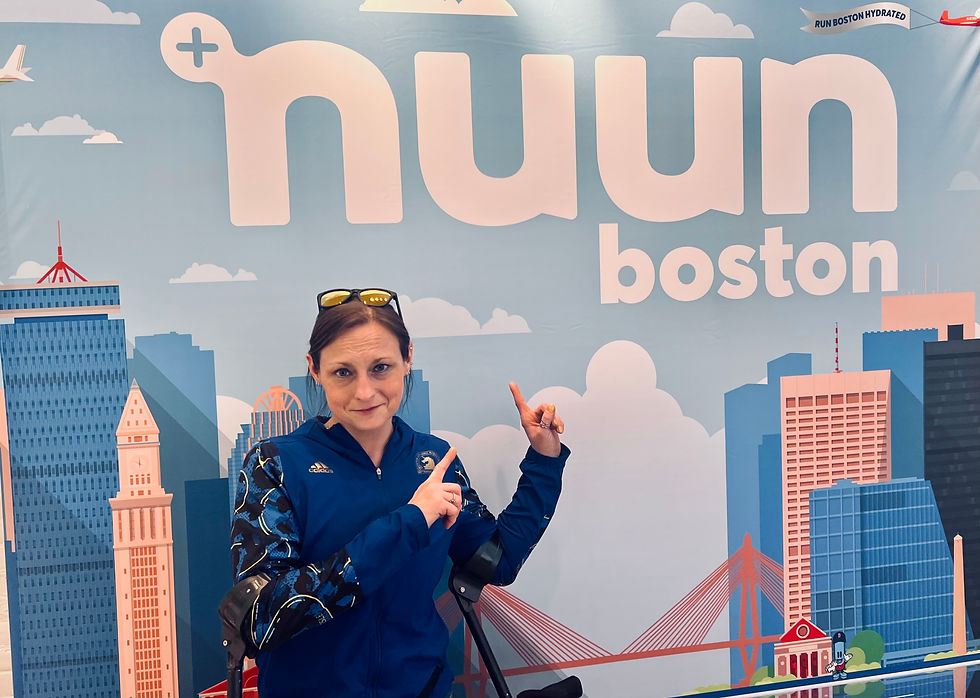
There is a common misconception that para athletics are easier, tamer versions of able-bodied sports. This could not be further from the truth. While an athlete with a disability may choose to identify as a para athlete, adaptive athlete, or similar name, the effort, dedication, and drive is equal to that of able-bodied athletes.
Any marathoner will tell you marathons are...well...hard. Like really hard. But, in the best possible way. I have learned to love the hard that comes with marathon training. The consistency that comes with training is comforting; the breathlessness that comes with efforts remind me I’m still alive; and the sweat that soaks my handcycle seat and dining room floor is proof of a good workout. And I had some good workouts!

In the six months leading up to Marathon Monday, my alarm went off at 3:30 AM five days a week. After 90-120 minutes on the indoor trainer set up in my former dining room, I would refuel, shower quickly, and head to the office for 8+ hours. Home by 5 PM, I would pack my already prepped lunch, have a quick dinner, and crawl into bed knowing the next day would look the same. Saturdays were my longer training sessions which meant 3-4 hours on the indoor trainer; Sundays were a mix of rest and weekly meal prep. This was my schedule over and over again until race week.
It was this consistency that would guarantee an easy day; I was certain of it. Race day morning, my alarm went off at 3:15 AM. I was already used to early mornings, so there were no grumbles or snooze buttons. Since the para heats start early, I was on my bus by 5 AM and Hopkinton bound at 6 AM. With the temps predicted to be a bit higher than usual, I knew hydration would be key. I sipped on Nuun Pink Lemonade Sport Powder and snacked on Fruity Pebbles as I watched the pavement go by. Once we arrived at Para Athletes Village, I switched to sweet potatoes and plain water. The nerves had just started to kick in when we were called to move. Handcyclists are set up in a grid format based on our BQ time. I had used my 2023 Boston Marathon finish of 1:49:54 and, with that, I was set in the 5th female position. Minutes later, we rolled out to the start line and anxiously awaited the starter’s pistol.
Unlike the runners’ start, our start is speed controlled via escort cyclists for the first mile. Though controlled, it’s still 2-3 minutes of mass chaos. We jockey for positions, look for openings in the grid, and try to set ourselves up in the best possible line to punch over the first hill on the course. I covered the first 5k of the course in just over 9 minutes and topped out at 35 MPH. Although speed is fun, we have to be mindful of road hazards. Potholes can lead to a cracked frame and train tracks can cause an instant flat – two of the surest, quick ways to end your race.

Admittedly, I could not keep up with the top two women, who are both phenomenal athletes. However, I was bouncing between 3rd, 4th, and 5th place until we hit the Newton hills. I raced the front half of the race conservatively and made sure my hydration (Nuun Strawberry Lemonade Endurance) and nutrition were on point. As soon as I made it to the top of Heartbreak Hill, I shifted and hit the course hard. I used the downhills to my advantage to punch over the remaining hills and held a steady effort on the flats. This strategy worked and I was able to hold 3rd place until the finish.
When I made the left on to Boylston Street, I was wicked stoked. Not only did I successfully follow a six-month training plan, but I also actually executed my race day plan. I set myself up for an easy day and it worked!
One of the best things that has come from my success as a para athlete is the opportunity to share the importance of inclusion for para/adaptive athletes in sports. Incidents of depression and secondary health conditions are significantly lower in individuals with disabilities who participate in sports. Inclusion and representation matter. Always.


Comments